Stasis
2025
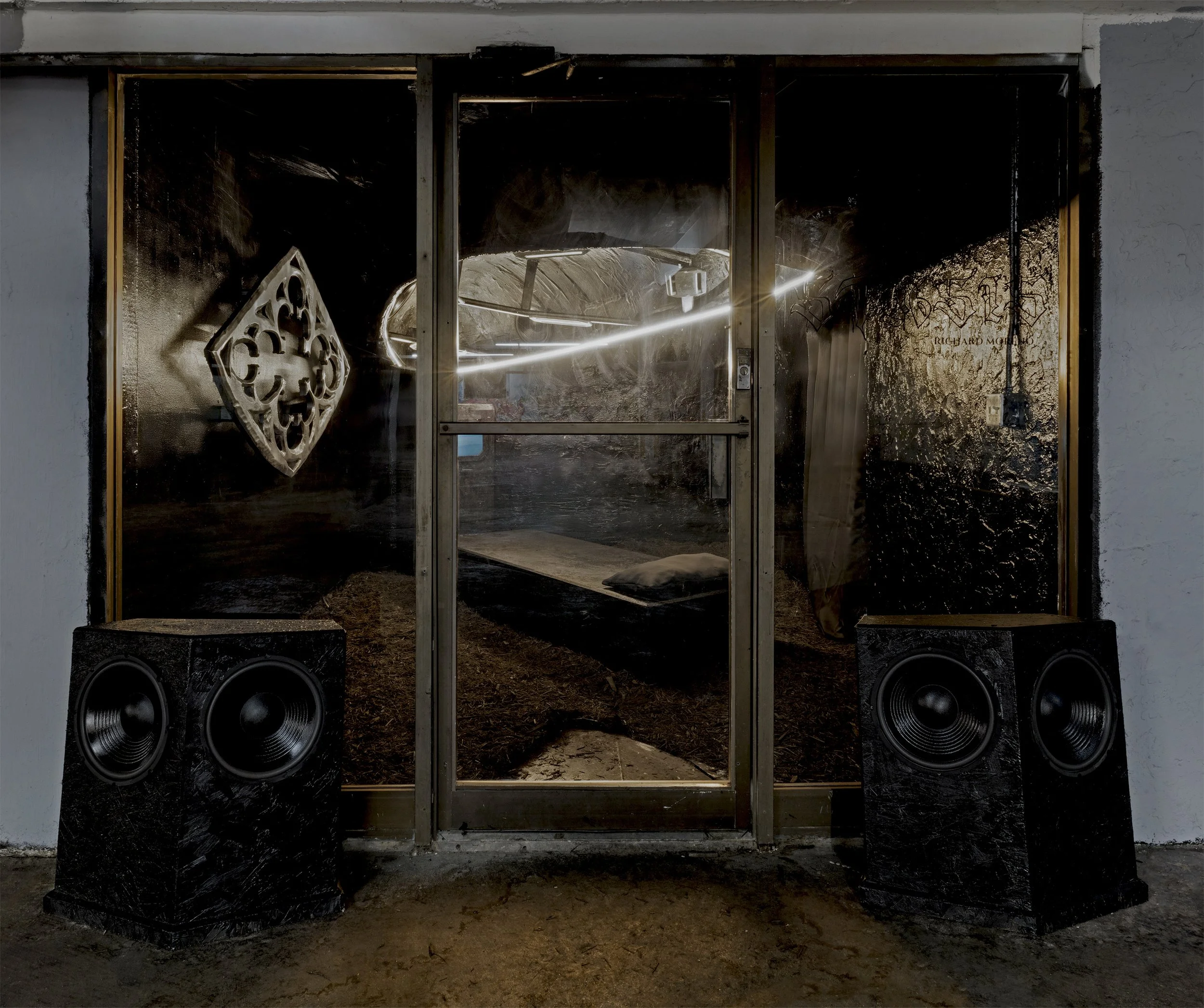
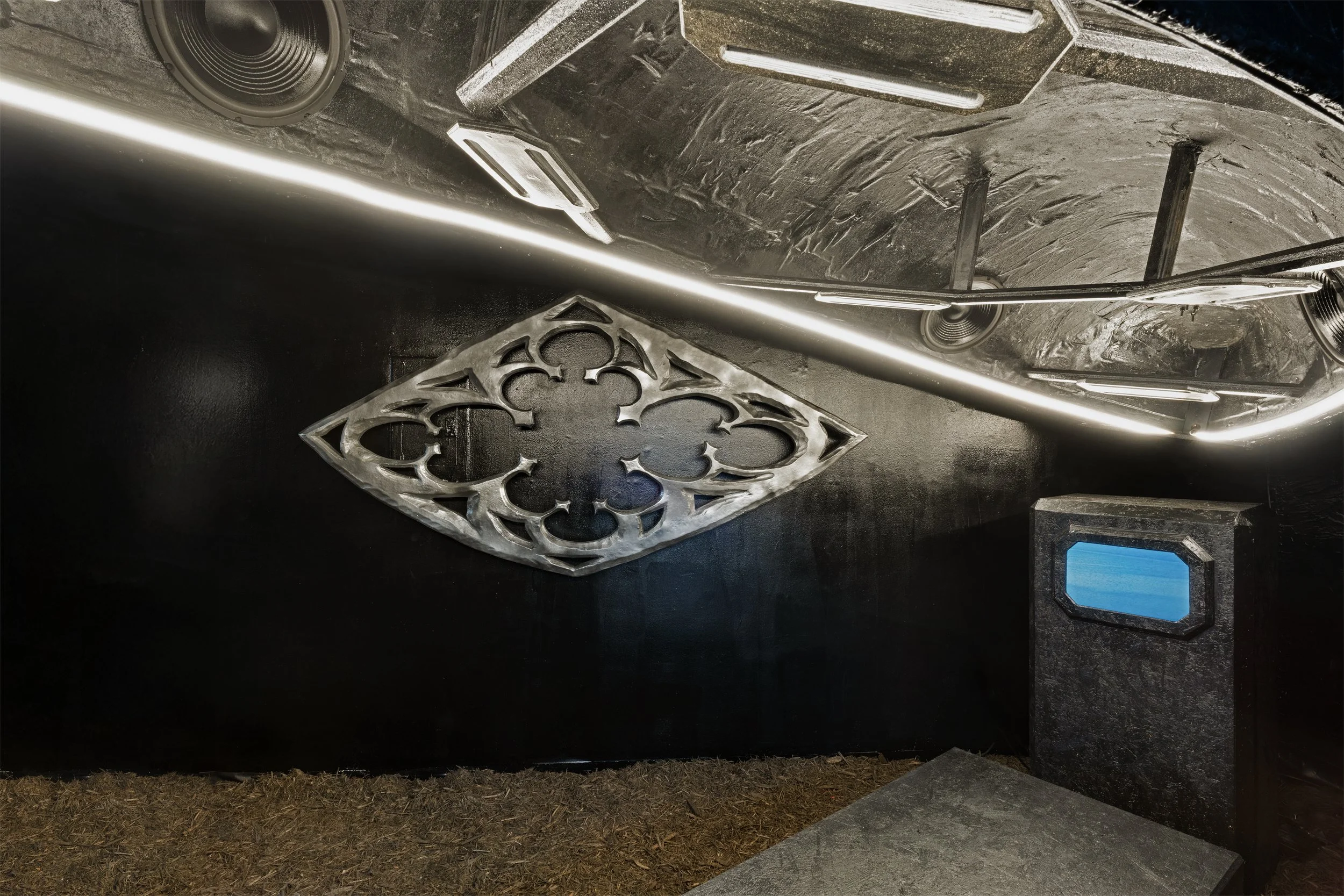
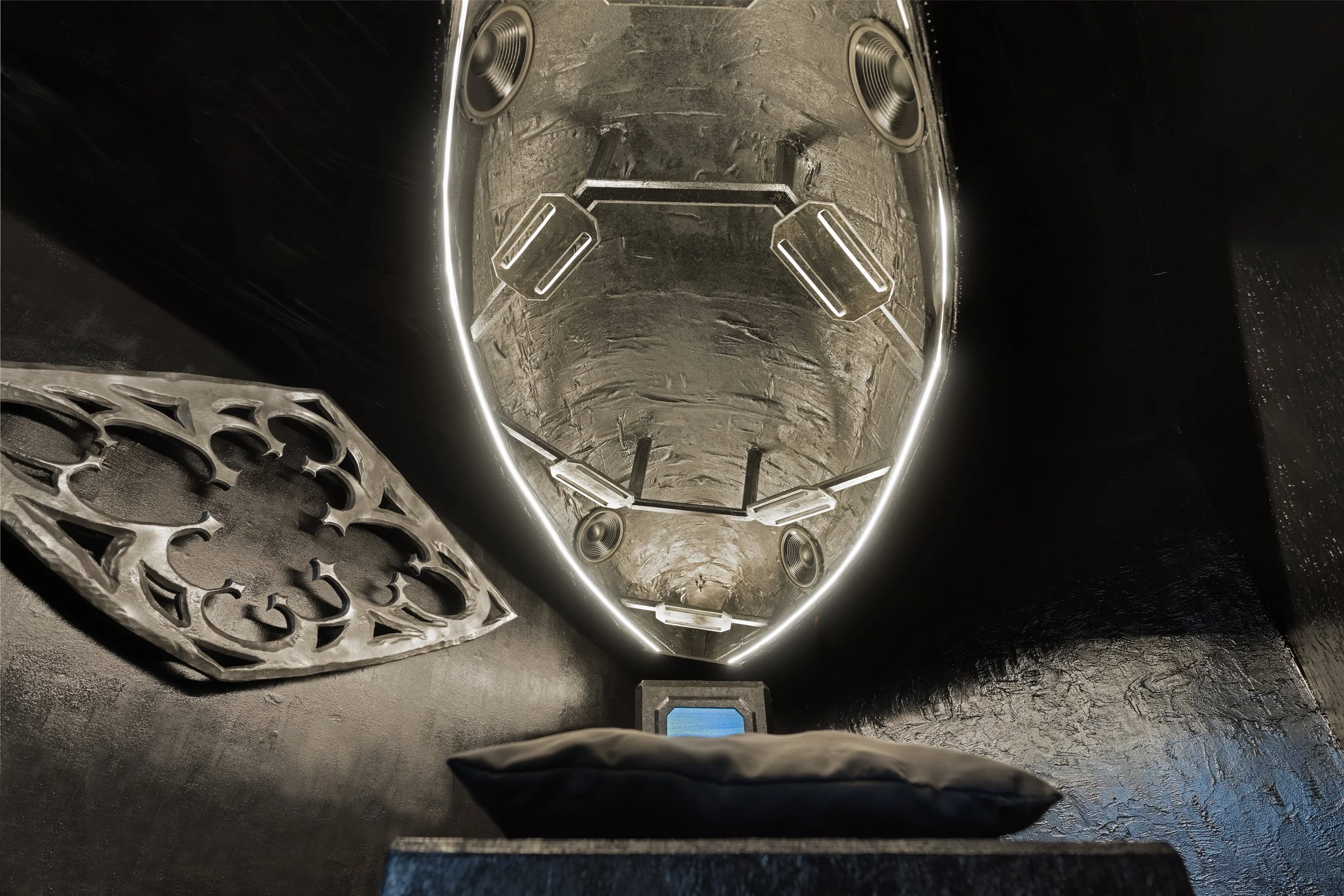
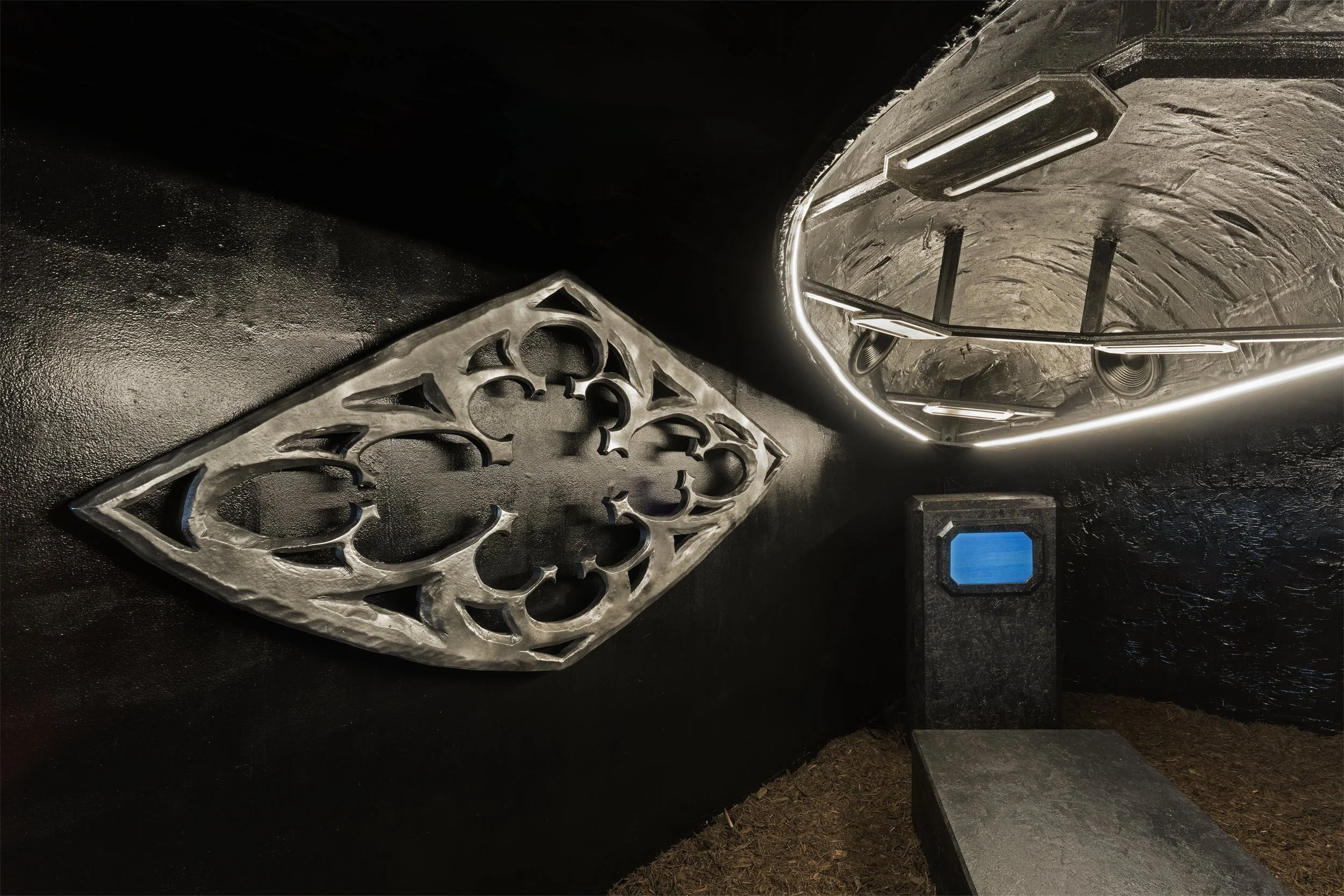
Tunnel is proud to present STASIS, a site-engulfing, sound-charged installation by Miami-based artist Richard Moreno. Centered on a monumental, hand-built canoe that first functioned as a real vessel in Biscayne Bay—before being rendered gloriously non-functional and suspended upside down as a massive amplifier sculpture—the project stages a darkly communal ritual around risk, migration, distortion, and faith in one another's DIY making. Visitors enter a blacked-out, below-ground gallery where the floor has been transformed into raw earth. A low pedestal holds a pillow to invite viewers to lie back, stare into the inverted hull, and feel sound move through the room like weather, memory, or shared electricity.
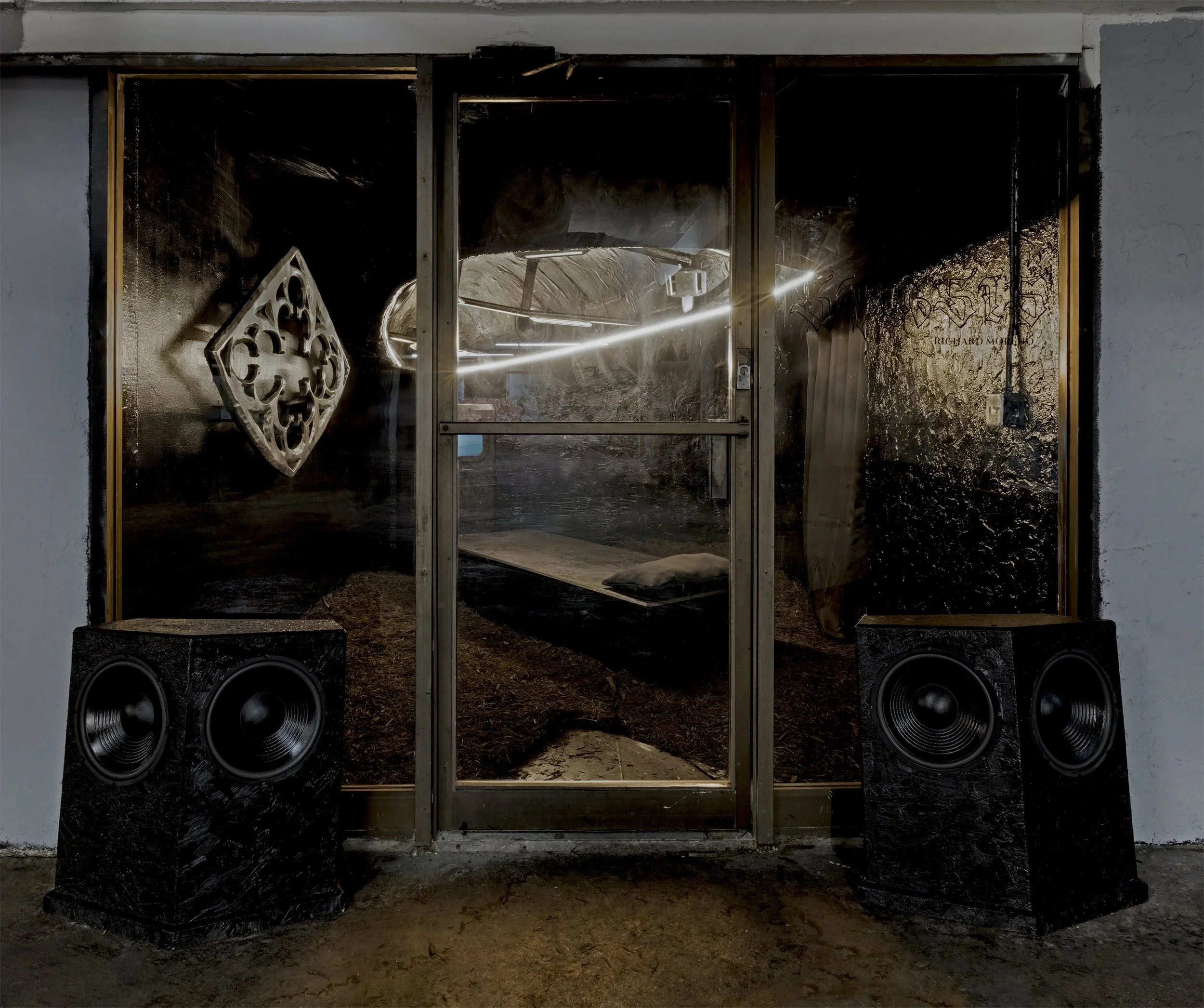
Funeral for a Canoe Megan Solis
You are standing under a wooden canoe that has already lived and died. Before it arrived here, it was painted black, gutted, wired, and hung upside down. Built by hand, crudely with optimism and trash-punk nerve. It grazed water. Carrying the artist and his compatriots across Biscayne Bay. It floated (mostly). The project is akin to some sort of South-Florida “Fitzcarraldo”. The trust of these friends to allow Moreno to take them on this voyage is implicit in the mission. The bravery, like many of his performances, whether it is the burning of his guitar or hunting the invasive boar, is about ritual and sacrifice. Now the vessel is suspended above a floor of soil in a darkened basement parking bay. In this inverted position, it reads as ceiling vault, tomb lid, cathedral hull, shipwreck, amplifier, reliquary, and warning. Inside are signal paths hacked together from Moreno’s long-running amplifier-sculpture practice: systems for moving sound, distortion, and vibration through objects that matter—plants, bones, and keepsakes—items that hold primal memory. STASIS heightens the function and dysfunction of the state. Miami and the greater South Florida landscape. It's flooding, it's storms, it's constant negotiation with rising water. So do the histories of people who crossed water by necessity, invention, or desperation. Moreno offers no literal narrative; instead, he gives us an emptied tool, asking what remains of a journey after arrival. Is a boat still a boat when it becomes an altar? When does survival infrastructure become ceremony? When does community risk become a collective myth?
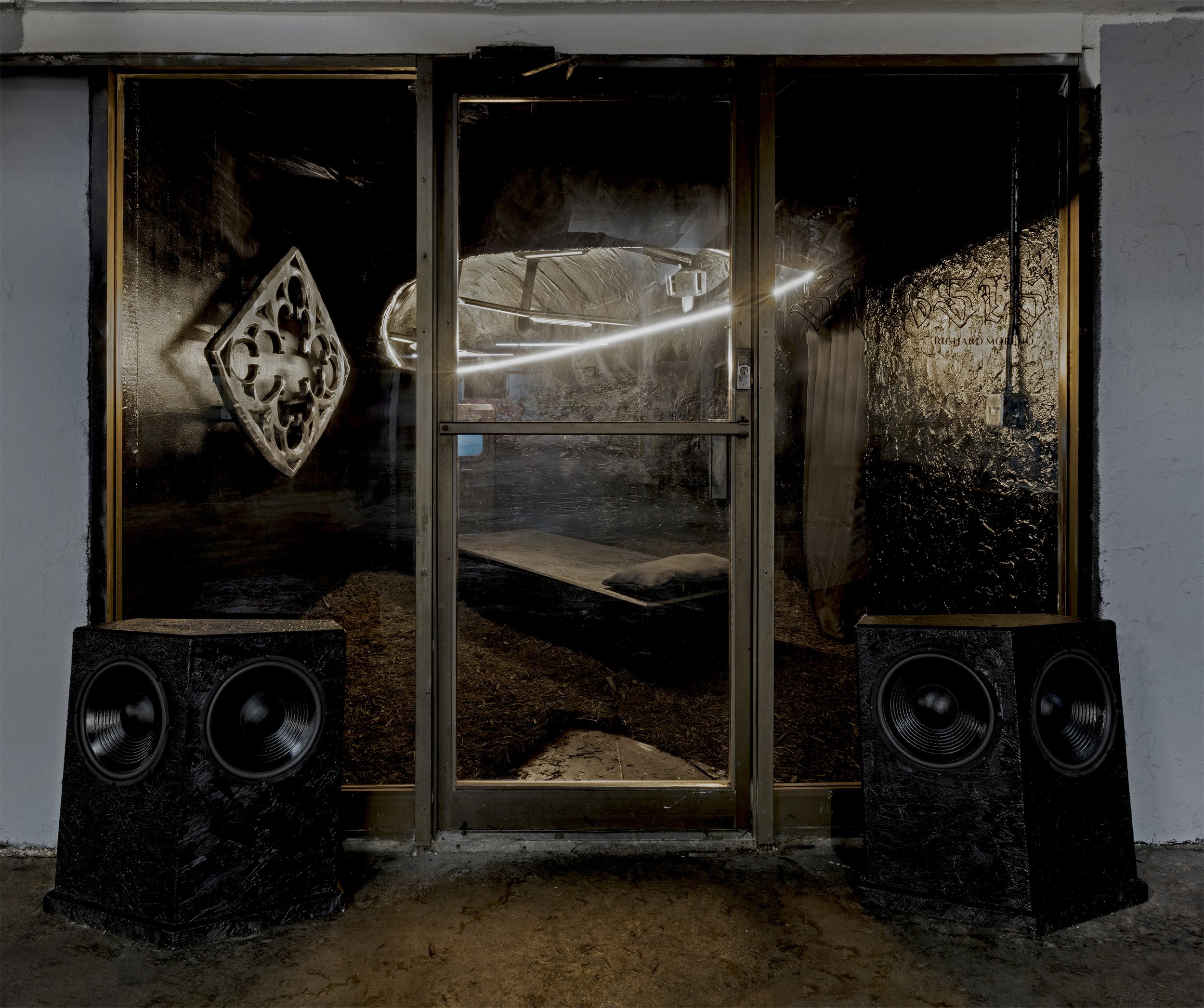
"Essentially, it’s just one piece," Moreno says, describing the month-long process of building a giant canoe by hand. A form equal parts survival tool, migrant craft, and punk project vehicle. Moreno documented an excursion with friends in the completed boat across Biscayne Bay. After its voyage, the canoe’s functional life ended: it returned to land, was gutted, re-fit with speakers, and hung from the ceiling like a relic-cum-casket of collective action. Still resonant, now unstable. Gallery walls go black; the floor becomes soil; bodies recline underneath the flipped vessel, listening. The work teases the boundary between shelter and instrument, journey and its aftermath. Its inversion conjures shipwrecks, crypts, or vaulted naves; its speaker arrays recall Moreno’s long-running practice of building amplifier-sculptures that channel sound as a connective magick. The piece hints, sometimes bluntly, sometimes poetically, at histories of water crossings, displacement, climate precarity in South Florida, and trusting the homies to get in a camp-made boat because you said it would float. Moreno activates the suspended canoe-amp in a durational performance developed with local musicians and invited collaborators. Expect waves of live distortion, field recordings from the Biscayne Bay voyage, and objects sonically “charged” inside the speaker chamber. This is a continuation of Moreno’s ritual practice in which sentimental items (family trinkets, found bones, other gifted keepsakes) are activated in vibration. The performance emphasizes community, poetic punk energy, friendship, and portable roots. With a special performance by Gavin Perry opening night at 8pm
A note to its witnesses:
Lie back in this space. Gaze into the hull. Listen as sound rattles soil, bone, and air. Like Moreno says, the signal may distort, and fidelity is never perfect, but distortion—alteration from a “true” state, this is how we register pressure, proximity, and the fact that energy is between us. In the dark, beneath a canoe that once held the sweat of bodies, now holds treble. We gather in the charged space between use and memory.